How We Ranked These Oral Probiotics
We ranked five oral probiotics against six criteria: published clinical evidence for the strain category, strain-disclosure transparency, format (chewable and lozenge have a delivery advantage for oral applications), refund-window terms, retail availability, and price per serving. The criteria and exclusion rules were set before any product was reviewed to prevent ranking bias.
We evaluated five oral probiotic products against six criteria: published clinical evidence for the strain category, strain-disclosure transparency (did the vendor name the actual strain, not just the genus?), format (chewable and lozenge formats have a meaningful delivery advantage over capsules for oral applications), refund-window terms, retail availability, and price per serving.
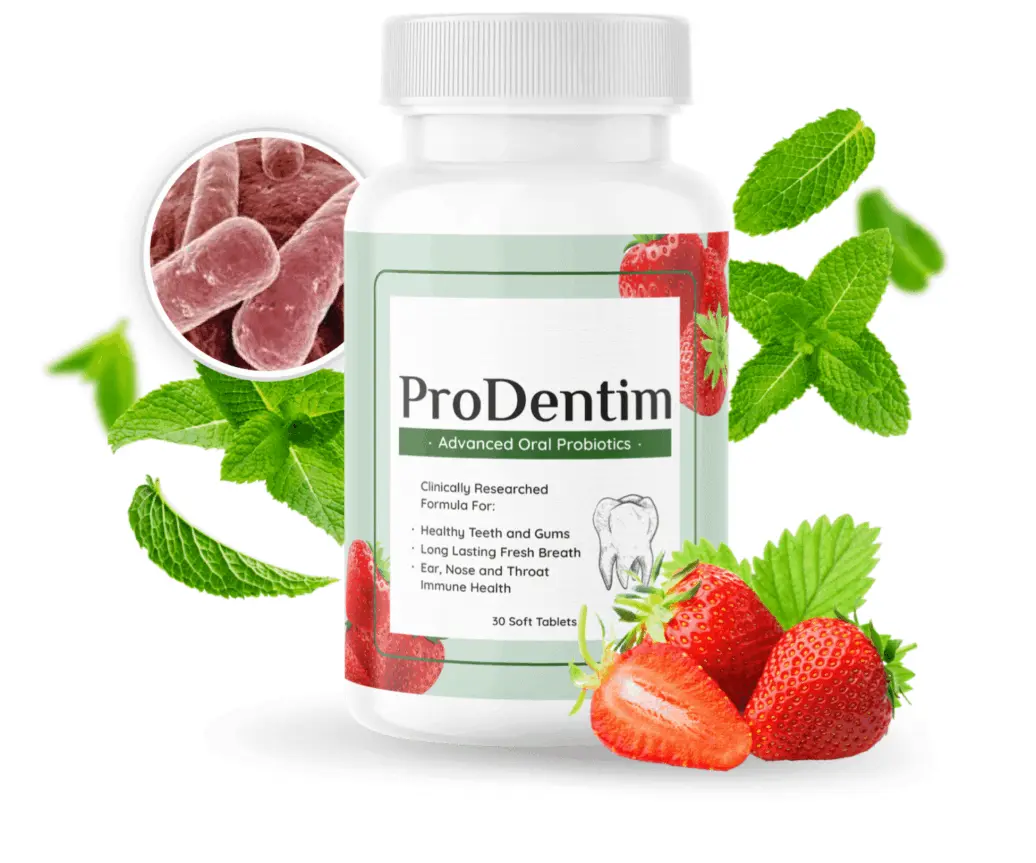
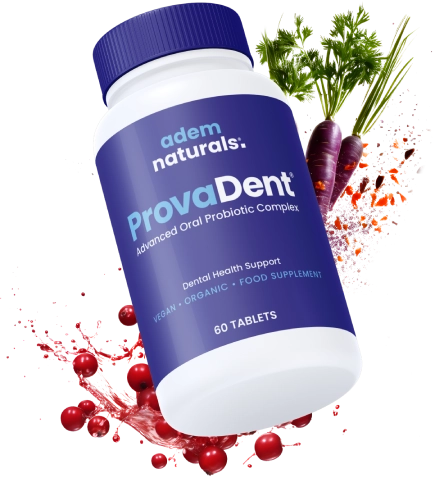
We excluded products where vendors refused to disclose any strain information whatsoever. ProvaDent is on this list because it at least names the strain class (Lactobacillus); that puts it ahead of the worst offenders in this category, even though it falls short of the disclosure standard set by ProDentim and BioGaia.
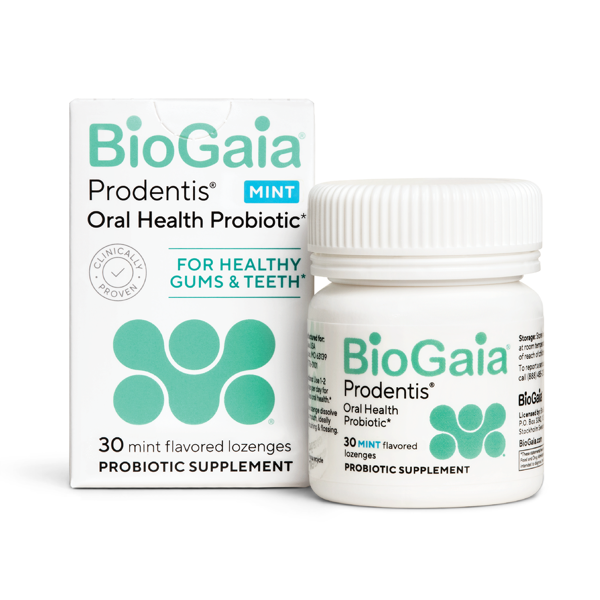
We earn affiliate commissions on links to ProDentim and some other products on this page. We do not earn a commission on BioGaia Prodentis links (Amazon Associates on those links returns negligible revenue; their job on this page is brand-credibility, not monetization). That financial relationship is disclosed precisely so you can weigh it. Our ranking methodology, not our commission structure, determined the order of these cards.
Last reviewed: May 21, 2026
The 3 Strains That Actually Matter
Three strain categories have accumulated meaningful peer-reviewed attention for oral-specific use: BLIS K12 (Streptococcus salivarius K12), Lactobacillus reuteri (specifically strains DSM 17938 and ATCC PTA 5289), and Lactobacillus paracasei. The clinical record supports these strain categories, not any branded formulation, which is why strain disclosure by full Latin binomial is the single most important thing to check before buying.
Not every probiotic that reaches your gut will do anything useful in your mouth. The oral cavity is a distinct microbiome with its own commensal species, its own pH dynamics, and its own colonization resistance. Swallowing a standard gut probiotic and expecting it to address oral volatile sulfur compounds is like planting a cold-weather crop in August.
The research on oral-specific strains is younger than the gut-probiotic literature, but three strain categories have accumulated enough peer-reviewed attention to be worth discussing:
BLIS K12 (Streptococcus salivarius K12). This is the most-cited strain in the oral-probiotic halitosis literature. BLIS K12 is a naturally occurring commensal of the human oral cavity; it produces bacteriocin-like inhibitory substances that may help crowd out the volatile-sulfur-compound-producing anaerobes responsible for chronic halitosis. A 2021 systematic review (PMC8173312) examined oral probiotics and halitosis and identified BLIS K12 among the best-supported strain categories for this application. BLIS Technologies, the New Zealand company that developed the strain and holds its intellectual property, reports more than 110 published studies and 40-plus clinical trials across its S. salivarius K12 and M18 platforms. A broader 2024 meta-analysis (PubMed ID 41289613) pooled data from 10 randomized controlled trials on probiotic interventions for halitosis and found a statistically significant reduction in volatile sulfur compounds (standardized mean difference of 1.01) and a meaningful improvement in organoleptic odor-judge scores (relative risk 1.31, 95% CI 1.22 to 1.41) across the included trials; the review named S. salivarius K12 among the specific strains with clinical evidence. NBC News reported on the broader halitosis-probiotic connection in 2023, citing the same class of research.
L. reuteri (specifically DSM 17938 and ATCC PTA 5289). BioGaia holds the patents on these two L. reuteri strains and has been studying them for more than 30 years. For gum health specifically, clinical trials using L. reuteri lozenges in periodontal patients began in 2009. A randomized, placebo-controlled trial by Vivekananda et al. (J Oral Microbiol. 2010;2) studied 30 patients with chronic periodontitis receiving either L. reuteri lozenges or placebo alongside scaling and root planing; the L. reuteri group showed measurable improvements in plaque index, gingival index, and gingival bleeding index, and significantly lower levels of periodontal pathogens including Porphyromonas gingivalis. A 2014 systematic review by Slot et al. (J Clin Periodontol. 41:4, pp. 327-334) evaluated L. reuteri's clinical efficacy across the periodontal disease and gingivitis literature and concluded it shows promise as an adjunct to conventional therapy. The 2024 halitosis meta-analysis noted above also included a crossover trial using the L. reuteri DSM 17938 plus ATCC PTA 5289 pair specifically. That combined research record is why BioGaia Prodentis earns the "Most science-backed" label on this page.
L. paracasei (and the broader Lactobacillus family). L. paracasei appears in ProDentim's formula and in several other products on this list. Direct clinical research on L. paracasei in oral applications is less extensive than for BLIS K12 or L. reuteri. The broader oral microbiome literature supports the Lactobacillus genus as a contributor to microbiome balance through competitive exclusion of pathogenic oral species. Evidence for specific strains varies considerably, and no finished-formula ProDentim trial covers this strain in isolation.
The honest context: none of the five products on this page have product-specific RCTs. What the clinical record supports is the strain category, not the branded formulation. When a vendor says their probiotic “supports oral health,” the strength of that claim depends entirely on whether the strain they used is one the research actually covers. Strain disclosure by full Latin binomial and ideally with CFU count is not a marketing feature. It is the minimum standard that lets you check the claim.
| Strain |
Form |
Dose Range |
Role |
Evidence Strength |
| BLIS K12 (S. salivarius K12) |
Chewable / lozenge |
500M to 1B CFU |
May help support a balanced oral microbiome; associated with reduced volatile sulfur compounds in research populations |
Moderate: 110+ published studies and 40+ clinical trials on the S. salivarius K12 and M18 platform (BLIS Technologies); identified in 2021 systematic review PMC8173312 and named in 2024 meta-analysis PubMed 41289613 (10 RCTs, VSC SMD 1.01) |
| L. reuteri DSM 17938 + ATCC PTA 5289 |
Lozenge |
100M to 200M CFU (per BioGaia Prodentis label) |
Gum health support and balanced oral microbiome; reduces periodontal pathogen load in RCT populations |
Moderate-to-strong: patented strains; RCT evidence from 2009 onward; Vivekananda et al. 2010 (30-patient RCT, J Oral Microbiol.); Slot et al. 2014 systematic review (J Clin Periodontol. 41:4); strain pair included in 2024 halitosis meta-analysis |
| L. paracasei |
Chewable / capsule |
Varies by product |
Oral microbiome support; competitive exclusion of pathogenic species |
Emerging: Lactobacillus genus supported in literature; strain-specific oral RCTs limited; no finished-formula ProDentim trial |